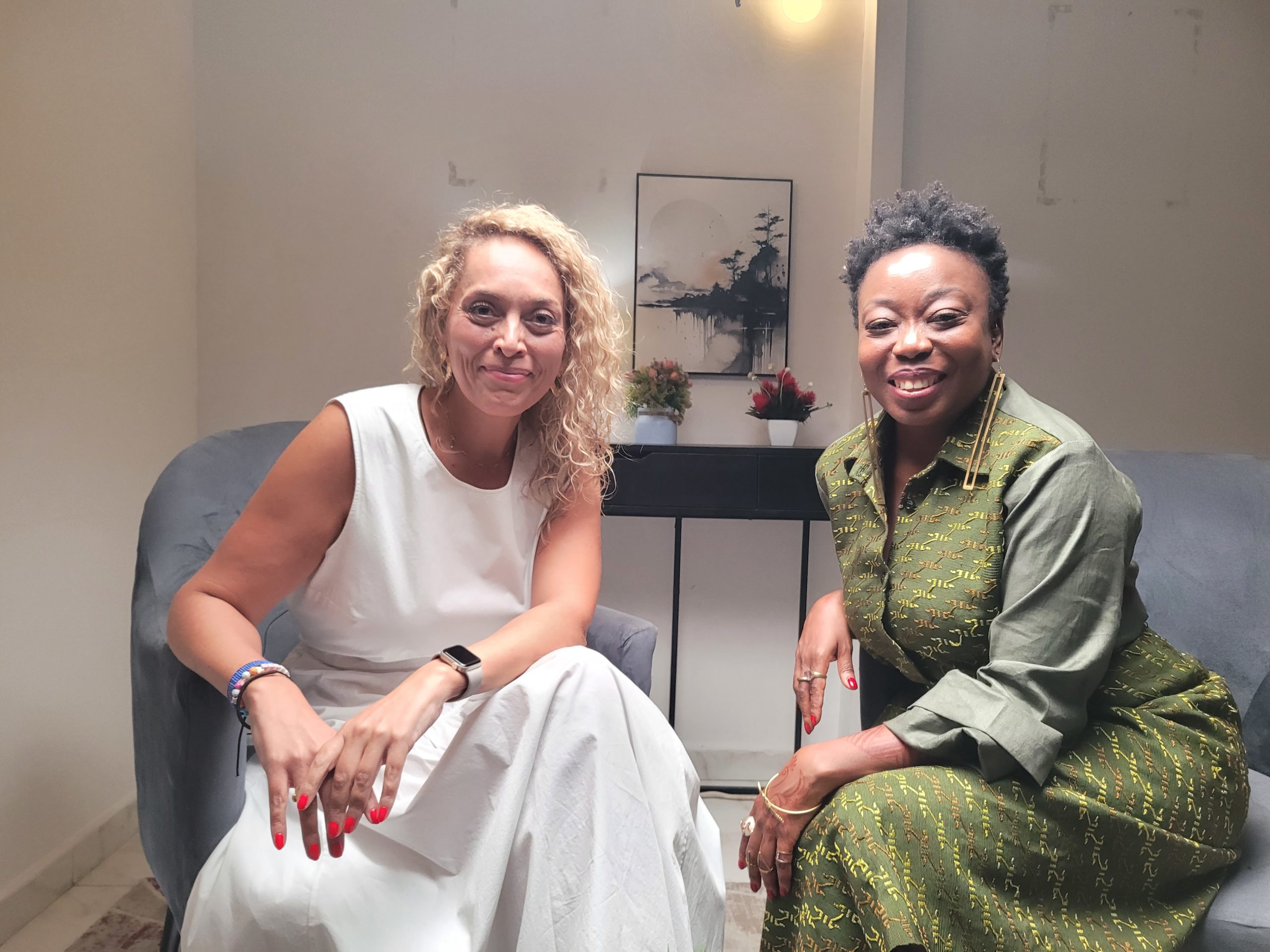
Everyone Needs a Product Person in Their Life: My Conversation with Adia Sowho
Some people build products. Others build companies. Other scale companies. The truly exceptional ones build ecosystems. That is Adia Sowho. In fact, I believe she does all three. And she also documents it in her inimitable style
If you have spent any time in African tech over the past decade, you will almost certainly have come across her work, even if you did not realise it at the time. Adia is a rare operator whose impact far exceeds her public profile. She is more often than not the quiet force behind conversations [and, importantly, interventions] that change the direction of companies, partnerships that unlock new markets, and decisions that shape how businesses grow and survive.
She’s a product queen at her core. Her understanding of the product is exceptional, but what sets her apart is how that sits alongside an almost instinctive grasp of business. She not only thinks about how products should work; she also thinks about how companies move, how deals get done, and how value is created across an entire ecosystem. In practice, that has meant brokering partnerships that others would not have seen, connecting people who needed to be in the same room, and helping companies find stability and direction at moments when both were under pressure. It is a rare combination and, in my experience, one of the most underrated skill sets in the ecosystem.
There is only one Adia; come and fight me if you believe otherwise.
Adia is a silent ninja; yes, she has rightfully adorned the requisite leader-focused listicles we see each year, but she isn’t a constant headline media presence, considering the reach and influence she has consistently had in African tech, and this is one of the [many] reasons I wanted Adia on The Wimbart Way. You would actually not even believe how many deals she has been part of in her time.
Our story goes back several years. When Adia was at Migo, she was looking for PR support, and a mutual friend introduced us. Migo became a Wimbart client, fine. However, what started as a straightforward agency conversation quickly became something way deeper.
Genuinely, it was a case of real recognising real from day one.
There was a shared way of thinking and communicating [bold, cutting, instinctive, unreserved] – fundamentally a visceral preference for straight answers over noise. Over time, that relationship moved beyond a client and agency dynamic. It became a running conversation about building, scaling and making better decisions in a fast moving ecosystem. Adia was and is my go-to sounding board on business building – not PR company building, but business building in general.
One conversation in particular has stayed with me. A few years ago, Adia challenged the way I thought about Wimbart. Like most agency founders, I had always understood our value through long-term retainer relationships. Founders would come to us because they wanted me directly involved in their PR, and I was often the one leading the charge, acting as the front person for the work. It worked well for clients because there was a level of trust in having the CEO embedded in the detail, but it also meant the business was constantly pulling on my time. In practice, it was effective and highly personalised, but it made it difficult to scale anything cleanly without so much of it flowing back through me. During this time, I was also building an elite senior team whose skills complemented mine – with the express intention of being able to scale our services and shoulder a little less of the day-to-day work. Whilst we may now be perceived as being dominant in the world of African tech PR, fundamentally, Wimbart has been slow to scale.
Adia asked a simple question that stayed with me. Why are you solving the same problems over and over again?
It was not framed as criticism, but more as an observation. But it changed how I saw everything. She encouraged me to stop thinking only as an agency founder and start thinking more like a product person. Instead of treating every brief as a one off request, she pushed me to look for patterns. Where were founders consistently getting stuck? What challenges kept appearing? Which problems were worth solving once and properly rather than repeatedly in slightly different forms?
That shift in thinking has fundamentally changed Wimbart. Looking back, I can draw a direct line between that conversation and two of the products we have built today. She analysed my situation, the market, and her grey matter started thinking about products and services that would take the heat off me a little.
The first product was born out of a programme we had developed – Wimbart Office Hours, which gives founders access to PR theory and practice, from senior communications support. It exists because many super early stage founders do not need more communication activity, they need an overview of what PR & Communications is, how to think about it and how to leverage it for their businesses. What started as an in-house ecosystem programme has now been developed into a white-label product for VCs and accelerators [and their early stage portfolio companies].
The second is Wimbart LITE, designed for early stage companies that understand the importance of communications but are not yet ready for a full agency engagement. It allows them to access structured support without overcommitting, and to build the right foundations at the right time.
Both came from the same place. A shift from bespoke, hyper CEO laden labour intensive service delivery to recognising repeatable problems. That shift came directly from Adia from just one conversation she and I had years ago. And we are also now working on our third product – more to come on that. Listening back to our podcast conversation, I was reminded that product thinking is rarely about features or frameworks. At its core, it is about observation, genuinely understanding your market and building products for them [not in spite of them].
Adia sees the product and the commercial reality. The idea and the deal that makes it possible. It is why she has been so effective across every organisation she has worked in.
The more I reflected on that, the more I saw how closely it mirrors good communications work.
The best PR professionals do not start with messaging, they start with understanding. They listen before they speak. They look for what is not being said. They try to understand context before they try to shape narrative. The best product people do exactly the same thing. You’ll see in this episode of The Wimbart Way, as I have done both professionally and personally for close to a decade, I am listening to Adia, and I’m taking her advice. I suggest you do too. My product boss has a way of simplifying complexity without stripping it of meaning. She asks questions that reframe problems rather than decorate them. Over time, those conversations change how you think, how you build and, importantly, how you generate new revenue streams.
African tech rightly celebrates founders. Increasingly, it celebrates operators too, but there are still too few conversations about the people whose influence is felt across the ecosystem without their names always appearing in headlines. The ones who are both the backbone and the conscience of the ecosystem. Adia is one of those people. Everyone needs a product person in their life. I know I did, and Wimbart is a better business because Adia happens to be mine.
Watch the conversation below. It’s also available on Spotify.