Juliet Umeh, Vanguard
Meet Juliet Umeh: Vanguard Newspaper’s Hi-Tech Correspondent, champion of digital inclusion, and, if things had gone a little differently, your next favourite fashion designer.
Starting with a background in Mass Communication and an insatiable curiosity, Juliet has spent years reporting from the frontlines of African ICT. But don’t expect her to talk only about specs and software.
From her deeply personal, award-winning coverage of how payment systems exclude people with disabilities to the policy changes shaping fintech, Juliet’s journalism is driven by a singular force: human impact.
When she isn’t breaking down complex tech concepts for the everyday reader, this self-described early bird and homebody is busy advocating for the authentic, solution-oriented stories of African startups on the global stage.
Dive into our latest Journalist Spotlight as Juliet shares her journey from fashion needles to tech beats, her advice for the next generation of storytellers, and why she is unapologetically optimistic about the future of African media.
What led you into journalism, and what would you be doing if you weren’t a journalist?
Thank you for that question. I would say journalism found me because it aligns with who I am. I studied Mass Communication for both my first degree and my Master’s, so choosing this career was quite intentional. But beyond my academic background, I also believe this is the path God ordained for me.
I’ve always been passionate about making a positive impact. Journalism gives me the opportunity to tell stories that matter, amplify the voices of people who might otherwise go unheard, and draw attention to issues that need urgent action. There is a deep sense of fulfilment that comes from knowing that a story you’ve written can influence policy, expose wrongdoing, or even change someone’s life for the better. That is what keeps me going.
If I weren’t a journalist, I would definitely be a fashion designer. Fashion has always been another passion of mine because it allows me to express my creativity.
My late mother was a fashion designer, back then, the profession was commonly referred to as tailoring. As a young girl, I was always sewing one thing or another with a needle, and I loved creating and designing clothes. That passion never left me. In fact, after I completed my National Youth Service Corps (NYSC), I enrolled with a fashion designer to learn the craft professionally. Although journalism became my career, fashion remains something I genuinely love and hope to explore even more in the future.
What story are you most proud of, and why?
One story that immediately comes to mind is “How Failures in Payment Infrastructure Lock Out People with Disabilities.” It’s difficult to choose just one because I’ve been a journalist for many years and have worked on several stories that have made an impact. But if I have to pick one, this would be it.
Working on that story changed my perspective. Speaking with visually impaired people and others living with disabilities made me realise the everyday barriers they face just to access basic financial services. In many developed countries, these are challenges that have already been addressed through inclusive systems, but here, many people are still excluded simply because the infrastructure wasn’t designed with them in mind.
The interviews were deeply emotional. They made me reflect on life and appreciate the resilience of people who have to overcome obstacles that most of us never even think about. It also inspired me personally to become more mindful of their needs beyond just reporting the story.
As a journalist, I wanted the story to do more than highlight a problem. I wanted it to amplify their voices and encourage the government, financial institutions and other stakeholders to build more inclusive systems so that people with disabilities can access services with dignity and truly feel a sense of belonging. That’s why this story remains one of the most meaningful pieces I’ve ever worked on.
Which sectors or industries do you like to cover most, and why?
Over the years, I’ve had the opportunity to cover different beats, including entertainment, health, women, and human interest stories. Currently, I cover the Information and Communication Technology (ICT) beat, which we refer to as Hi-Tech at Vanguard newspaper.
I have discovered that technology is the future. It has transformed the way we live, work and communicate, and, as people often say, it has turned the world into a global village. What I enjoy most is that technology is no longer just about gadgets or innovation; it touches every aspect of our lives, from healthcare and education to finance, agriculture and governance.
Being on the ICT beat has allowed me to combine everything I’ve learned throughout my career with my passion for telling stories that make a difference.
Whether I’m reporting on digital inclusion, fintech, artificial intelligence or policies shaping the digital economy, my focus is always on how these developments affect ordinary people.
I can honestly say I enjoy covering technology because it gives me a sense of purpose and fulfilment. It provides a platform for me to inform, educate and advocate for solutions that can improve people’s lives, and that’s what I find most rewarding about journalism.
What’s the hardest part of covering the beat you focus on?
One of the hardest parts of covering the ICT beat is keeping up with how fast the industry evolves.
Technology changes almost every day, with new innovations, policies and trends emerging constantly. As a journalist, you have to keep learning so that you can understand these developments and explain them accurately to your audience.
Another challenge is simplifying technical concepts. Many technology issues can be quite complex, so my job is to break them down into language that the average reader can easily understand without losing the essence of the story.
Access to information can also be challenging at times. Some organisations are reluctant to share data or speak openly, especially on sensitive issues such as cybersecurity, data privacy or regulatory matters. It often takes patience, persistence and building trust with sources to get the complete picture.
Despite these challenges, I enjoy the beat because it pushes me to keep learning and gives me the opportunity to report on innovations that are shaping the future and improving people’s lives.
What do most founders/business leaders misunderstand about journalists?
I think one of the biggest misconceptions many founders and business leaders have is that journalists are only interested in negative stories or are out to find faults. In reality, our job is to tell balanced, accurate and factual stories.
If a company is doing something innovative or making a real impact, we are happy to report that as well.
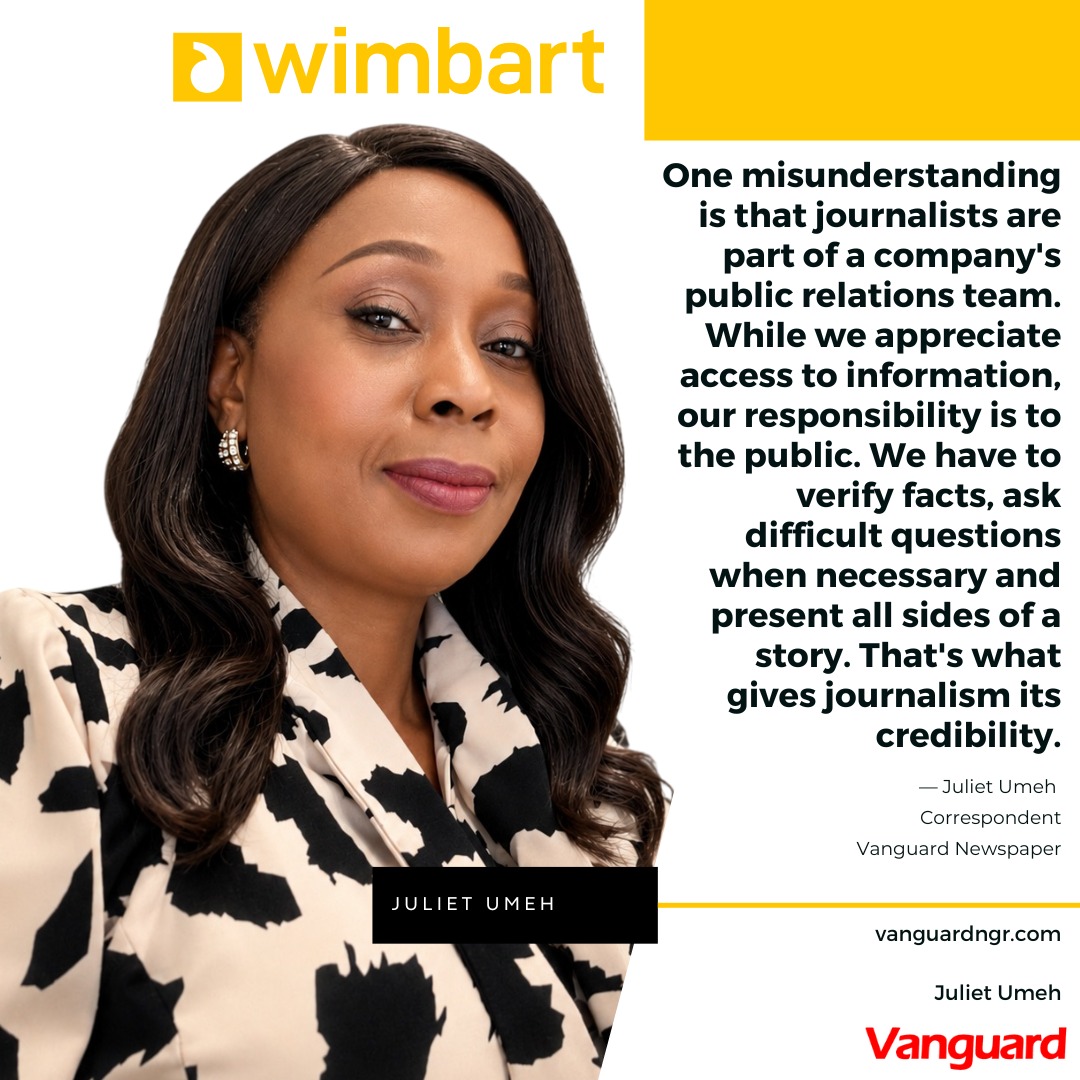
Another misunderstanding is that journalists are part of a company’s public relations team. While we appreciate access to information, our responsibility is to the public. We have to verify facts, ask difficult questions when necessary and present all sides of a story. That’s what gives journalism its credibility.
I also think some business leaders underestimate the value of building genuine relationships with journalists. They often reach out only when they want publicity or when there’s a crisis. But when there’s mutual trust and open communication, it becomes much easier to tell their stories accurately and fairly.
At the end of the day, I believe journalists and business leaders want one common thing—to inform people. We simply approach it from different perspectives. When both sides understand and respect each other’s roles, everyone benefits, especially the public.
Why is it important that people around the world get to hear about young, growing companies on the continent?
It’s important because Africa is full of innovation, creativity and resilience, yet many of the amazing things happening here don’t get the global attention they deserve. There are young companies across the continent solving real problems in areas like finance, healthcare, agriculture, education and logistics. These are not just businesses; they’re creating jobs, improving lives and driving economic growth.
When the world hears these stories, it changes the narrative about Africa. Instead of focusing only on challenges, people also get to see the innovation, talent and opportunities that exist here. That can attract investment, partnerships and support that help these companies grow even further.
As a journalist, I believe telling these stories is important because visibility matters. A startup in Lagos, Nairobi or Kigali could have a solution that benefits people far beyond its own country. The more we shine a light on these businesses, the more opportunities they have to scale, compete globally and inspire the next generation of African entrepreneurs.
For me, it’s about making sure the world sees Africa not just as a continent with challenges, but as a continent of solutions and limitless potential.
With AI on the rise, is journalism getting more creative?
Absolutely. I think AI is making journalism more interesting and, in many ways, more creative. Rather than replacing journalists, it’s enhancing the way we work and making some aspects of the job less stressful.
For example, AI can help with research, analysing large volumes of data, transcribing interviews and even generating ideas. That means journalists can spend more time on what really matters, investigating stories, verifying facts, asking the right questions and telling compelling human stories.
AI is only a tool. It cannot replace human judgment, ethics, critical thinking or the ability to build trust with sources. Those are the qualities that define good journalism.
So, I see AI as a partner rather than a competitor. If we use it responsibly, it can help us become more efficient and even more creative, while allowing us to focus on producing quality journalism that serves the public.
What advice would you give to young journalists starting today?
My advice to young journalists is to stay curious, keep learning and never lose sight of why you chose this profession. Journalism is not always easy, but if you’re passionate about telling the truth and making an impact, it can be incredibly rewarding.
I would encourage them to keep doing what they’re doing, but also strive to improve every day. Read widely, ask questions, verify your facts and don’t be afraid to take on difficult stories. Your credibility is your greatest asset, so protect it at all costs.
They should also embrace new technologies, including AI, because journalism is evolving. The more skills you develop, the more valuable you’ll become. But no matter how technology changes, integrity, accuracy and empathy will always remain the foundation of good journalism.
Most importantly, be patient. Success doesn’t happen overnight. Keep working hard, stay humble, and let your work speak for you. Every story is an opportunity to make a difference in someone’s life.
What gives you hope about the future of journalism in Africa?
What gives me hope is the incredible talent and resilience of African journalists. Despite the many challenges we face, I see so many young journalists who are passionate about telling stories that matter and holding those in positions of authority accountable. That passion gives me confidence that the future of journalism is bright.
I’m also encouraged by how technology has expanded the opportunities for storytelling. Today, journalists can reach wider audiences through digital platforms, use data to strengthen their reporting, and tell stories in more engaging ways than ever before.
Another reason I’m hopeful is that more African stories are gaining global attention. We’re no longer waiting for others to tell our stories. African journalists are telling them ourselves, with the right context, depth and authenticity.
Of course, there are still challenges, such as misinformation, funding and the need to protect press freedom. But I believe that as long as we continue to uphold the values of accuracy, fairness and integrity, journalism in Africa will continue to grow and remain a powerful force for positive change.
Quick Fire Segment
- Fried rice or jollof life: Fried rice
- In-person conversation or written questions?: Written questions
- Homebody or outsider?: Homebody
- Early bird or night owl?: Early bird
- Voice notes or texts?: Voice notes
- If you had to guess, what would be the next big beat (e.g., cleantech, defencetech)?: I feel Cleantech
- Movie night or fine dining?: Fine dining o