Kabui Mwangi, Nation Media Group
We’re closing out the Media Spotlight series for the year with Kabui Mwangi of Nation Media Group!
From discovering a love for language early on to breaking into the Nation Media Group in 2021, Kabui’s journey is rooted in curiosity, rigour, and a passion for impactful storytelling. In this feature, he reflects on why African business reporting matters, the stories that excite him most, and why global visibility can open doors for young companies across the continent.
What led you into journalism, and what would you be doing if you weren’t a journalist?
I grew up reading a lot of books from a very early age. My father constantly supplied them, and that exposure gave me a better command of language and, eventually, a natural ability to write. I joined the Nation Media Group in October 2021, and that was the beginning of my professional journalism journey.
If I weren’t a journalist, I would probably be in legal practice or academia, which are fields that also demand rigor in research, writing, and critical thinking.
When you’re researching stories, what compels you to work on sharing a particular story with your audience? Any hot trends we should look out for in the coming months?
Impact, novelty, and relevance are my guiding principles. I mainly focus on technology because it’s ever-evolving and there’s always something new to present to the audience. Often, these stories shape developments in industry and policy. That’s exciting because it positions me not just as a reporter but also as a thought leader. At the moment, AI and the digital economy are top of mind, particularly in Kenya, where their adoption and regulation will define much of the business landscape going forward.
Why is the African business landscape unique, and what makes it exciting to report on?
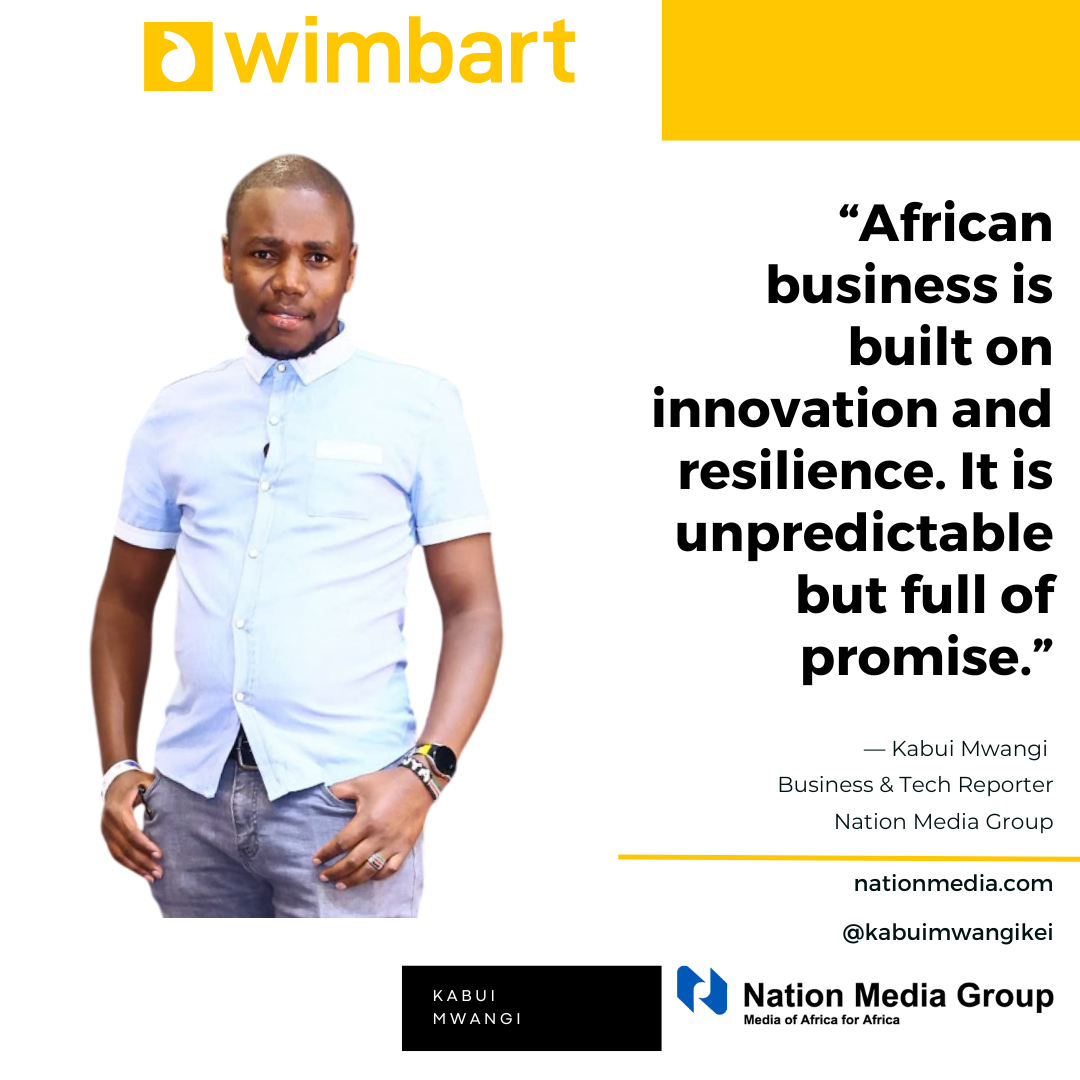
African business is built on innovation and resilience. It is unpredictable but full of promise.
For me, the excitement comes from being an African telling African stories and showcasing our business landscape to the world. We’re not just documenting events, we’re shaping how the continent is perceived globally.
Which sectors or industries do you like to cover most, and why?
I cover a lot of technology and startups, and that’s where I find the most satisfaction. These spaces are filled with lessons for budding entrepreneurs, and they show the creativity and determination of Africans solving local problems with global implications.
Why is it important that people around the world get to hear about young, growing companies on the continent?
Because exposure opens doors. When young companies are seen on the global stage, they gain access to funding, partnerships, collaborations, and markets that would otherwise remain closed.
These stories change perceptions, inspire confidence, and show that innovation is thriving in Africa.
How can we encourage more people to tell stories about African tech and business?
I think we need stronger editorial guidance, resources, and mentorship. Too many talented young writers start but don’t get the support they need to grow in the craft. Collaboration between journalists and businesses is also critical. Entrepreneurs need to be more open about sharing their journeys because those stories have the power to attract opportunities not just for them, but for the wider ecosystem.
What are your thoughts on Artificial Intelligence in journalism?
AI is best seen as a collaborative tool. It enhances efficiency, supports research, and makes data analysis faster. But the danger is in asking AI to do your work for you – it should remain assistive, not a replacement. Journalism requires judgment, context, and ethics, things AI cannot provide. Used wisely, it can make us better at our craft; used carelessly, it can erode the very value of journalism.